"Brain rot" started as a joke — the foggy, fried feeling after an hour of mindless scrolling. Then, in 2024, Oxford University Press named it the Word of the Year. The meme had outgrown the meme. Underneath the comedy is a genuinely strange set of findings about what high-frequency digital input does to attention, memory, and the brain's reward system. Here are eight of them.
1. "Brain rot" is now an actual dictionary entry
Oxford defines it as "the supposed deterioration of a person's mental or intellectual state," especially from overconsumption of trivial online content. Usage of the term rose roughly 230% in a single year before it won the 2024 title. When lexicographers start tracking your group chat's favourite insult, something cultural is happening.
2. Your attention span on a screen is about 47 seconds
Researcher Gloria Mark spent two decades measuring how long people stay focused on a single screen before switching. In 2004, the average was 2.5 minutes. By 2023, it had collapsed to 47 seconds. And every switch isn't free — it raises stress and measurably lowers the quality of whatever you were doing.
Each time you flick away and back, your brain pays a "context-switching" tax to reload what you were doing. Do it every 47 seconds for an afternoon and the tax dwarfs the work. The feeling of being busy but achieving nothing is this tax, made of attention.
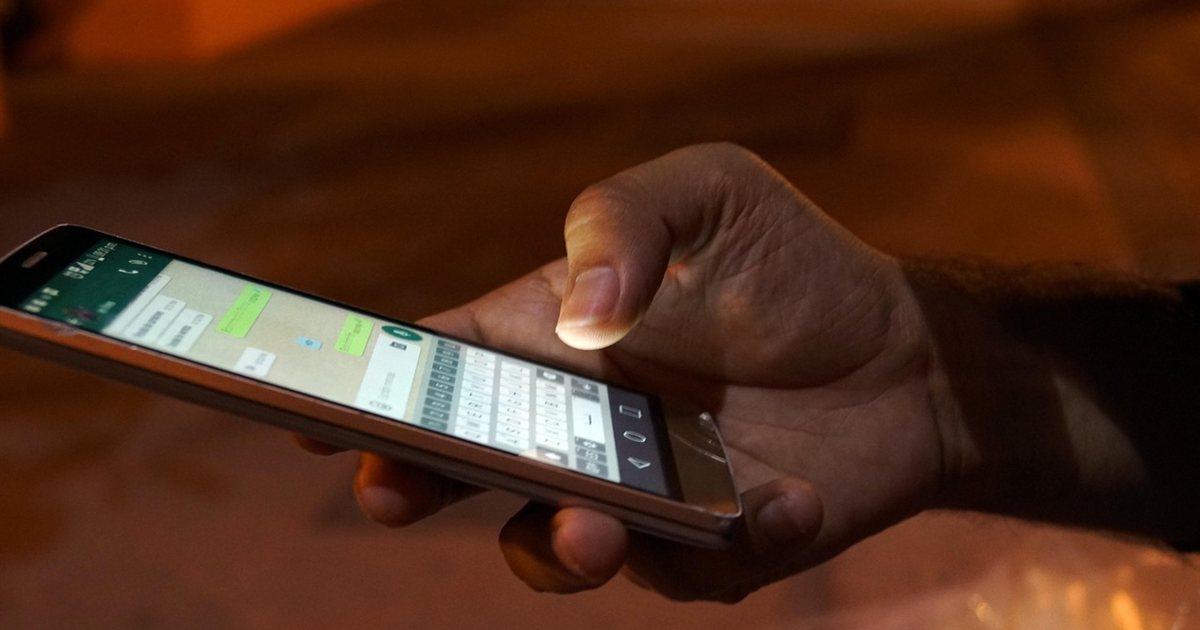
3. You touch your phone around 2,617 times a day
When the research firm dscout actually instrumented people's phones and counted, the average user racked up 2,617 touches a day — and the heaviest users more than doubled that. Most people, asked to guess, lowball it by an order of magnitude. The reach has become invisible to the person doing it.
4. People choose electric shocks over being alone with their thoughts
In a now-famous 2014 study published in Science, participants were left in a bare room for 15 minutes with nothing but their thoughts and a button that delivered a painful electric shock. 67% of men and 25% of women shocked themselves rather than sit quietly. Boredom, it turns out, has become genuinely intolerable — and that was before short-form video.
5. Your brain has started outsourcing its memory
Psychologists call it the "Google effect", or digital amnesia: when we know information is a search away, the brain stops storing the information itself and remembers where to find it instead. One survey found around half of adults couldn't recall their own partner's phone number from memory. Convenient — until the recall you need was never encoded.
6. Short-form video runs on the same schedule as a slot machine
Infinite feeds and short-video apps deliver rewards on a variable-ratio schedule — unpredictable payoffs that arrive every so often, no matter how much you scroll. That's the exact mechanism behind slot machines, and it's the most powerful behavioural reinforcement schedule known. The brain recalibrates to that pace, which is why a slow task afterwards doesn't feel boring so much as painful.
7. The boredom you eliminated is where ideas come from
Boredom isn't dead time — it's when the brain's "default mode network" consolidates memories, plans, and makes the loose connections we experience as creativity. By filling every gap with a feed, we've quietly deleted the mental state that does some of our most useful background work. The shower-thought is an endangered species.
8. The damage reverses — the brain is plastic
Here's the reassuring part. None of this is permanent. The same neuroplasticity that fragmented your attention can rebuild it. People who cut short-form video, reintroduce single-tasking, and deliberately tolerate boredom show measurable improvements in focus within weeks, not years. Brain rot is a state, not a sentence.
So how rotted are you, really?
The honest answer is that almost everyone is somewhere on the spectrum now — the question is where. If you want a slightly-too-honest read on your own attention span, scroll reflex, boredom tolerance, memory, and dopamine baseline, that's exactly what the Brain Rot IQ Test measures.
Sources & further reading
- Oxford University Press — Word of the Year 2024
- Gloria Mark — Attention Span (2023), UC Irvine
- Wilson et al. (2014) — Just think: the challenges of the disengaged mind, Science
- Sparrow, Liu & Wegner (2011) — Google effects on memory, Science
Related
- 🧠 Take the Brain Rot IQ Test — five symptoms, one diagnosis.
- 📚 The psychology of doomscrolling — why the feed is so hard to put down.
- 📚 Why personality tests feel accurate — the Barnum effect explained.
- 📚 More explainers in the Learn hub